While 2009 may go down as a year many home builders would like to forget, a renewed focus on home remodeling and energy efficiency has fueled record growth for the nationally syndicated home improvement radio show The Money Pit.
Hosts Tom Kraeutler and Leslie Segrete added 60 new radio stations to the show’s 228 station line up in the last 11 months, marking the biggest growth year in the show’s 10 year history.
“In an economy where few could afford to move, The Money Pit has been an invaluable resource for listeners looking to make their homes more comfortable, energy efficient and affordable. The show is an important part of our line-up, and is popular with both listeners and the local sponsors looking to reach them,” said Paul Giammarco, Program Director for Money Pit affiliate WPRO in Providence, RI.
We’ll call this chapter: “Eliminating the Middleman. All of Them”
Pleasantly surprised one morning to open my email and find a completely unsolicited testimonial about a client’s product:
Hi Nora,
Please comsider this endorsement for the American Standard “speed connect” drain. If you find it helpful in any way please feel free to modify and use in the promotion of the product.
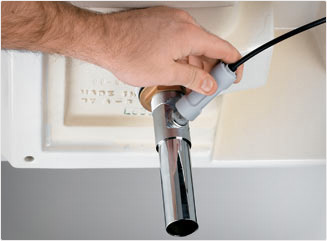
“American Standard has introduced the “speed connect” drain to many of their faucet lines this year. The company claims that there are fewer moving parts to install, the drains will seal and hold water upon installation and the drains will not need adjustment. These claims are all true.
What American Standard has not stated is that this new cable action pop-up drain assembly is what the plumbing industry has needed for decades. This drain really does what AS claims and more.
Ask any plumber what the most difficult or frustrating part of installing a lavatory faucet is and they will say the drain linkage and adjustment. Well, not after they install this drain. American Standard has removed the linkage and replaced it with a cable not unlike some of the bath drains that are out there.
This new lavatory drain is a problem solver and it is a pleasure to install.”
Obviously, not just any testimonial. John Murphy is a master plumber in New England, active on Linked In and other social networks and President of the new National Association of Plumbing Showroom Professionals. We had met through Linked In and enjoyed an ongoing dialogue.
But I hadn’t sent him anything about Speed Connect. Who did?
Among the flurry of emails shooting back and forth across American Standard’s servers that day, we tried to solve the mystery. It was much later in the day when the truth was revealed:
To All
This came about from a discussion that I began with John on Linkedin, another example of the power of social media.
Don
Donald C. Devine
CEO, American Standard Brands
There is much talk about what CEOs should or should not be doing online. Don Devine does pretty much the same thing he does offline: talks to customers and prospects. When the door opened with John Murphy, Don asked him to try one of our products. Talk about eliminating the middlemen … and middlewomen.
Social media isn’t a magical new fad. It’s simply a new way to communicate, cost-effectively opening up dialogue that didn’t exist in the old marketing communications model.
In the old days (1990s), building professionals such as kitchen & bath designers might give helpful feedback to their rep and it might work its way up the corporate food chain, and something might happen.
Or not.
In October, kitchen & designer Paul Anater published a blog post, Sears’ Blue Crew Needs Some Work, detailing his frustrations with the Sears Kenmore built-in appliances his new kitchen remodeling clients had purchased on their own.
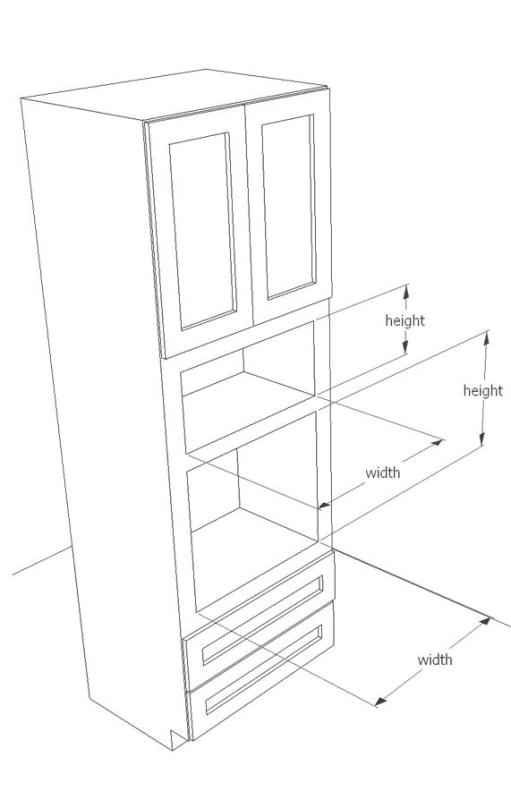
The St. Petersburg, Florida designer could not get the necessary dimensions from the Sears Kenmore website, nor from their hapless customer service reps, kept well-protected from pesky customers by a phone tree from heck.
“If I can’t tell the cabinet maker these dimensions, he can’t build me the cabinet I need. They have to be exact because we’re talking about a several thousand dollar cabinet here and there’s no such thing as a return for custom work, Paul blogged.
Paul took note that the Sears website spends more digital real estate “touting the virtues of the Blue Crew than it does dispensing information. It’s difficult to navigate and the information I needed was buried. There was no pro section and no dimension guide. Ridiculous.”
He continued: “Why not take some of the serious cash you’re spending on the Blue Crew TV and print spots and spend it instead on updated spec books and some training for your trained professionals? This doesn’t bode well and you can rest assured that you have a kitchen designer in Florida who’s actively pointing his clients as far from your doors as he can.”
A dedicated and prolific communicator, Paul promoted his blog post via his Twitter account, @saintpetepaul. Talk about hitting a nerve. “That post set off a firestorm of commiseration in my comments section and on Twitter that lasted throughout the weekend,” Paul says. “When I first wrote that post I thought that I was the only one who had these frustrations. To say I’m not alone in this is an understatement.”
Paul’s blog post was published on a Saturday. On Monday morning, Paul had a voice mail message from a Sears executive. “He was very clear in his e-mail that he wasn’t out to make a Kenmore convert out of me,” Paul noted. “Rather, what he wanted to gain from a conversation with me was a better understanding of the sort of information design professionals need from them.”
The Sears exec asked if Paul would be willing to talk to him and a couple members of his team. Paul upped the ante. He volunteered to solicit feedback from his nationwide network of kitchen & bath designer friends, and got 12 of them to join the call, which almost certainly became the lowest-cost focus group ever.
Results:
Paul: “Let me start out by saying that I am beyond impressed with Sears Appliances. I see them in a whole new light. I mean, how many members of the appliance industry would open themselves up to a panel discussion with a group of designers and architects who’d been hand picked by blogger who’d been done wrong? ….You guys showed me a side to your company I never knew existed. Bravo.”
Sears: Within three weeks of that call, Sears was back in touch with Paul to continue the dialogue, asking if he would be interested in an an ongoing series of conversations.
Blog-based websites like ours make it easy for anyone to publish content on the web.
The hard part is learning how to be a publisher. As more brands get into more content on their website, they quickly learn that there is an art to creating and presenting content that will attract the best audience for your product. Here is one view of that process:
Business Week reports on “below the line” marketing: tactics that do not involve advertising in specific online or offline media:
” Experiential marketing, high-profile events, and online content accounted for 62% of total marketing spending in 2008, up from 57% in 2004, according to a survey by Veronis Suhler Stevenson.” Read more.
Walt Disney said about customer service: “Do what you do so well that they will want to see it again and bring their friends.”
Michelle Henderson, kitchen and bath designer and showroom manager at Banner Plumbing Supply Company in Buffalo Grove, Illinois, takes this ideal to heart. Banner Plumbing Supply increased their showroom sales 20 percent through extraordinary customer service.
Lowe’s CEO Robert A. Niblock, in being cautiously optimistic about the outlook for home improvement spending in 2010, said: “Consumers are being deliberate. But the home is still an integral part of the family.”
Newest NAHB survey results, reported by Building Online. Americans who are 55+ cite preference for suburban living, single-story homes and amenities that include high-speed Internet access.
While the report states that boomers “don’t consider ‘universal’ design a priority,” we would bet that such design principles are actually welcomed and expected, although vain boomers wouldn’t be caught dead asking for them.
The latest Architecture Billings Index from the American Institute of Architects shows continued weakness in the commercial building sector. Developers are still having trouble getting loans.
 While 2009 may go down as a year many home builders would like to forget, a renewed focus on home remodeling and energy efficiency has fueled record growth for the nationally syndicated home improvement radio show The Money Pit.